Buy bbio-project.eu ?
We are moving the project
bbio-project.eu .
Are you interested in purchasing the domain
bbio-project.eu ?
domain@kv-gmbh.de · 0541-91531010
Buy bbio-project.eu ?
What is the Eva principle in biology?
The Eva principle in biology refers to the idea that females are the limiting factor in reproduction. This principle is based on the fact that females invest more energy and resources into producing offspring, while males can produce many more gametes with less investment. As a result, the reproductive success of a population is often limited by the number of available females, rather than the number of available males. This principle has implications for understanding mating systems, sexual selection, and population dynamics in biology. **
What is the principle of antagonism in biology?
The principle of antagonism in biology refers to the relationship between two or more organisms or biological processes that are in opposition to each other. This opposition can be in the form of competition for resources, such as food or territory, or in the form of one organism preying on another. Antagonistic relationships are a fundamental aspect of ecological interactions and can have significant impacts on the balance of ecosystems. Examples of antagonism in biology include predator-prey relationships, competition between species for the same resources, and the interactions between parasites and their hosts. **

Similar search terms for Principle
Top-Angebote
Products related to Principle:
-
CGP Books GCSE Combined Science: Biology AQA Revision Question Cards: superb for the 2024 and 2025 exams (CGP AQA GCSE Combined Science)It’s all very well reading through your study notes, but how much can you actually remember? Put your GCSE Biology knowledge to the test with CGP’s brilliant Revision Question Cards! There are 63 cards in the pack, covering all the key Biology topics from the Grade 9-1 AQA (Trilogy Specification) Combined Science course. Each one starts off with quick questions to warm you up, followed by harder questions to get your brain into top gear. Flip the card over and you’ll find full answers to each question, carefully written to help you understand everything you need to know. Along the way, we’ve packed in plenty of diagrams and expert revision tips, and there are even questions on Working Scientifically and Practical Skills. Amazing!6,95 £*Shipping: 2,99 £Secure redirect to the provider
-
CGP Books GCSE AQA Combined Science Revision Question Cards 3 Pack Set (Chemistry, Physics, Biology)To cut to the chase, there’s more to revision than just reading through study notes. If you really want to make sure you know GCSE Chemistry, Physics and Biology you’ll need to test yourself - and that’s where these CGP Revision Question Cards come in! There are 95 cards in the pack, covering every key Grade 9-1 AQA topic. Each one starts off with quick questions to warm you up, followed by harder questions to get your brain into top gear. Flip the card over and you’ll find full answers to each question, carefully written to help you understand everything you need to know. Along the way, we’ve packed in plenty of diagrams and expert revision tips, and there are even questions on Working Scientifically and Practical Skills. Amazing!21,99 £*Shipping: 2,99 £Secure redirect to the provider
-
Nicholas Brealey Publishing The 80/20 Principle, Atomic Habits, How to Talk to Anyone Collection 3 Books Set by Richard Koch, James Clear, Leil LowndesThe 80/20 Principle The unspoken corollary to the 80/20 principle is that little of what you spend your time on actually counts. But by concentrating on those things that do, you can unlock the enormous potential of the magic 20 percent. Discover how to identify the few methods that will lead to great results, and use them alone. Avoid hard work. Don't push water uphill. Be very selective in what you do. Have a great life. Atomic Habits People think that when you want to change your life, you need to think big. But world-renowned habits expert James Clear has discovered another way. He knows that real change comes from the compound effect of hundreds of small decisions: doing two push-ups a day, waking up five minutes early, or holding a single short phone call. He calls them atomic habits. In this ground-breaking book, Clears reveals exactly how these minuscule changes can grow into such life-altering outcomes. How to Talk to Anyone Never be at a loss for words again! Perfect your people skills with his fun, witty and informative guide, containing 92 little tricks to create big success in personal and business relationships. In How To Talk To Anyone, bestselling relationships author and internationally renowned life coach Leil Lowndes reveals the secrets and psychology behind successful communication16,50 £*Shipping: 2,99 £Secure redirect to the provider
-
Research-powered Eye Duo - Skincare Kit Charlotte Tilbury 3315 Charlotte's Research-powered Eye Duo Size:Darlings, unlock the secret to eyes that appear brighter, depuffed, smoother and younger with my Research-Powered Eye Duo! This CharlotteTilbury.com EXCLUSIVE skincare duo includes:94,05 £*Shipping: 0,00 £Secure redirect to the provider


-
What is the economic principle: the principle of minimum or the principle of maximum?
The principle of minimum and the principle of maximum are economic principles that relate to decision-making. The principle of minimum states that individuals or firms will seek to minimize their costs or inputs in order to achieve a certain level of output or outcome. On the other hand, the principle of maximum states that individuals or firms will seek to maximize their benefits or outputs given a certain level of inputs or costs. Both principles are important in guiding economic decision-making and resource allocation. **
-
What is the difference between law and principle in science?
In science, a law is a statement that describes a consistent and universal relationship between different phenomena. Laws are based on empirical evidence and are often expressed in mathematical equations. On the other hand, a principle in science is a fundamental truth or concept that explains the behavior of natural phenomena. Principles are more general and can be used to derive specific laws or theories. In summary, laws describe specific relationships between phenomena, while principles are fundamental concepts that underlie these relationships. **
-
What is the principle of the key-lock principle?
The key-lock principle is based on the idea that certain molecules or structures (keys) can fit into specific receptors or binding sites (locks) with high specificity and affinity. This principle is commonly used to describe the interaction between enzymes and their substrates, where the enzyme (lock) has a specific active site that perfectly fits the substrate (key), allowing for efficient catalysis. The key-lock principle highlights the importance of complementary shapes and chemical properties between molecules for effective interactions to occur. **
-
What is the ping-pong principle or the hourglass principle?
The ping-pong principle, also known as the hourglass principle, is a communication strategy where information is exchanged back and forth between two parties in a structured and concise manner. It involves each party taking turns to speak or provide input, similar to a game of ping-pong. This principle ensures that communication is balanced, effective, and allows for active listening and engagement from both parties. It helps to maintain a focused and productive conversation by preventing one party from dominating the discussion. **
What is the rocket principle and the principle of recoil?
The rocket principle states that for every action, there is an equal and opposite reaction. This means that when a rocket expels gas out of its engines, the force of the gas pushing out is matched by an equal force pushing the rocket in the opposite direction. The principle of recoil is similar, stating that when a gun is fired, the force of the bullet being expelled from the barrel is matched by an equal force pushing the gun in the opposite direction. Both principles are based on Newton's third law of motion, which describes the relationship between the forces acting on two interacting objects. **
Which animal is suitable for a biology research project?
The choice of animal for a biology research project depends on the specific research question and the ethical considerations involved. For example, if the research involves studying mammalian physiology, mice or rats are commonly used due to their genetic similarity to humans. If the research focuses on behavior, social structure, or communication, animals such as primates or birds may be more suitable. It is important to consider the welfare of the animals and to use the most appropriate species for the research question while minimizing harm. **
Top-Angebote
Products related to Principle:
-
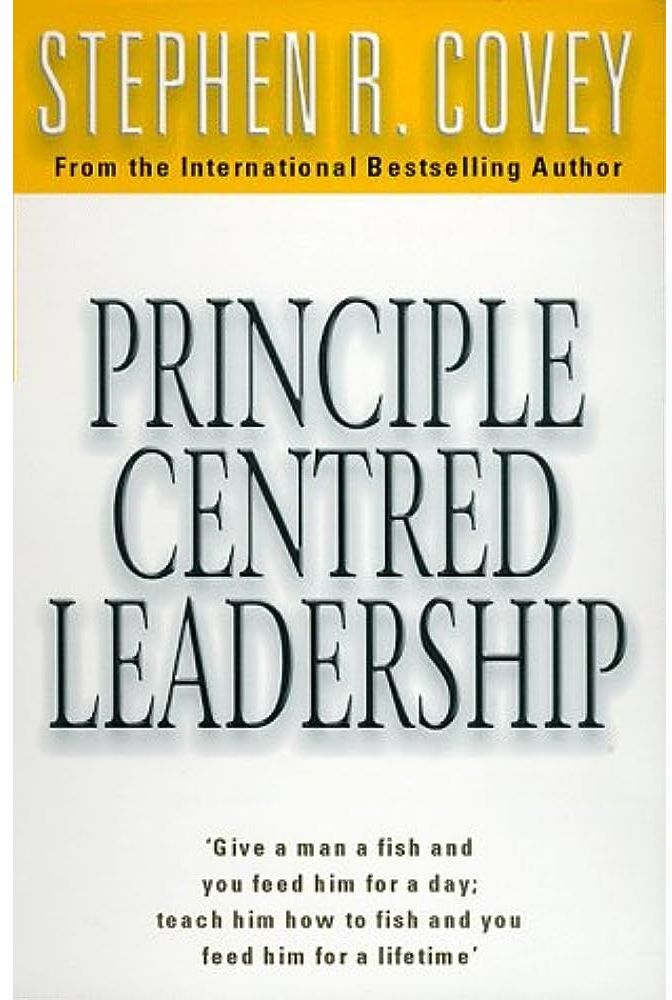
Simon & Schuster Principle Centred Leadership by Stephen R CoveyPRINCIPLE CENTRED LEADERSHIP will help solve these dilemmas - and many others:* how do we achieve a wise and renewing balance between work and family in the midst of constant pressures and crises?* how do we unleash the creativity, talent and energy of the vast majority of the work force, whose jobs neither require nor reward such resources?* how can we have a culture characterised by change, flexibility and continuous improvement and still maintain a sense of stability and security?* how do we create team spirit and harmony among people and departments that have been criticising and attacking each other for years?* how do we get people and culture aligned with strategy, so that everyone in an organisation is as committed to the strategy as those who formulated it?6,99 £*Shipping: 2,99 £Secure redirect to the provider
-
John Murray The 80/20 Principle : The Secret of Achieving More with Less: by Richard KochREAD THIS BOOK AND USE IT - TIM FERRISS Twenty years after its first publication, The 80/20 Principle is a global bestseller read by millions of highly effective people around the world. Now, it is more powerful and essential than ever. In the past, the principle gave those who used it a serious advantage.In the future, it will be the essential tool for anyone who wants to succeed. And it is powerful. Based on the counter-intuitive but widespread fact that 80% of results flow from 20% of causes, The 80/20 Principle shows how you can achieve much more with much less effort, time and resources, simply by concentrating on the all-important 20%.This major new edition includes four brand new chapters showing how to: Use the rise of networks to your advantage Benefit from more acute 90/10 and 99/1 forms of the principle Tap into your subconscious to exert a super-potent and amazingly favourable influence on your life Enjoy greater success with 5 mega rules to live by5,95 £*Shipping: 2,99 £Secure redirect to the provider
-
CGP Books GCSE Combined Science: Biology AQA Revision Question Cards: superb for the 2024 and 2025 exams (CGP AQA GCSE Combined Science)It’s all very well reading through your study notes, but how much can you actually remember? Put your GCSE Biology knowledge to the test with CGP’s brilliant Revision Question Cards! There are 63 cards in the pack, covering all the key Biology topics from the Grade 9-1 AQA (Trilogy Specification) Combined Science course. Each one starts off with quick questions to warm you up, followed by harder questions to get your brain into top gear. Flip the card over and you’ll find full answers to each question, carefully written to help you understand everything you need to know. Along the way, we’ve packed in plenty of diagrams and expert revision tips, and there are even questions on Working Scientifically and Practical Skills. Amazing!6,95 £*Shipping: 2,99 £Secure redirect to the provider
-
CGP Books GCSE AQA Combined Science Revision Question Cards 3 Pack Set (Chemistry, Physics, Biology)To cut to the chase, there’s more to revision than just reading through study notes. If you really want to make sure you know GCSE Chemistry, Physics and Biology you’ll need to test yourself - and that’s where these CGP Revision Question Cards come in! There are 95 cards in the pack, covering every key Grade 9-1 AQA topic. Each one starts off with quick questions to warm you up, followed by harder questions to get your brain into top gear. Flip the card over and you’ll find full answers to each question, carefully written to help you understand everything you need to know. Along the way, we’ve packed in plenty of diagrams and expert revision tips, and there are even questions on Working Scientifically and Practical Skills. Amazing!21,99 £*Shipping: 2,99 £Secure redirect to the provider
-
What is the Eva principle in biology?
The Eva principle in biology refers to the idea that females are the limiting factor in reproduction. This principle is based on the fact that females invest more energy and resources into producing offspring, while males can produce many more gametes with less investment. As a result, the reproductive success of a population is often limited by the number of available females, rather than the number of available males. This principle has implications for understanding mating systems, sexual selection, and population dynamics in biology. **
-
What is the principle of antagonism in biology?
The principle of antagonism in biology refers to the relationship between two or more organisms or biological processes that are in opposition to each other. This opposition can be in the form of competition for resources, such as food or territory, or in the form of one organism preying on another. Antagonistic relationships are a fundamental aspect of ecological interactions and can have significant impacts on the balance of ecosystems. Examples of antagonism in biology include predator-prey relationships, competition between species for the same resources, and the interactions between parasites and their hosts. **
-
What is the economic principle: the principle of minimum or the principle of maximum?
The principle of minimum and the principle of maximum are economic principles that relate to decision-making. The principle of minimum states that individuals or firms will seek to minimize their costs or inputs in order to achieve a certain level of output or outcome. On the other hand, the principle of maximum states that individuals or firms will seek to maximize their benefits or outputs given a certain level of inputs or costs. Both principles are important in guiding economic decision-making and resource allocation. **
-
What is the difference between law and principle in science?
In science, a law is a statement that describes a consistent and universal relationship between different phenomena. Laws are based on empirical evidence and are often expressed in mathematical equations. On the other hand, a principle in science is a fundamental truth or concept that explains the behavior of natural phenomena. Principles are more general and can be used to derive specific laws or theories. In summary, laws describe specific relationships between phenomena, while principles are fundamental concepts that underlie these relationships. **
Similar search terms for Principle
-
Nicholas Brealey Publishing The 80/20 Principle, Atomic Habits, How to Talk to Anyone Collection 3 Books Set by Richard Koch, James Clear, Leil LowndesThe 80/20 Principle The unspoken corollary to the 80/20 principle is that little of what you spend your time on actually counts. But by concentrating on those things that do, you can unlock the enormous potential of the magic 20 percent. Discover how to identify the few methods that will lead to great results, and use them alone. Avoid hard work. Don't push water uphill. Be very selective in what you do. Have a great life. Atomic Habits People think that when you want to change your life, you need to think big. But world-renowned habits expert James Clear has discovered another way. He knows that real change comes from the compound effect of hundreds of small decisions: doing two push-ups a day, waking up five minutes early, or holding a single short phone call. He calls them atomic habits. In this ground-breaking book, Clears reveals exactly how these minuscule changes can grow into such life-altering outcomes. How to Talk to Anyone Never be at a loss for words again! Perfect your people skills with his fun, witty and informative guide, containing 92 little tricks to create big success in personal and business relationships. In How To Talk To Anyone, bestselling relationships author and internationally renowned life coach Leil Lowndes reveals the secrets and psychology behind successful communication16,50 £*Shipping: 2,99 £Secure redirect to the provider
-
Research-powered Eye Duo - Skincare Kit Charlotte Tilbury 3315 Charlotte's Research-powered Eye Duo Size:Darlings, unlock the secret to eyes that appear brighter, depuffed, smoother and younger with my Research-Powered Eye Duo! This CharlotteTilbury.com EXCLUSIVE skincare duo includes:94,05 £*Shipping: 0,00 £Secure redirect to the provider
-
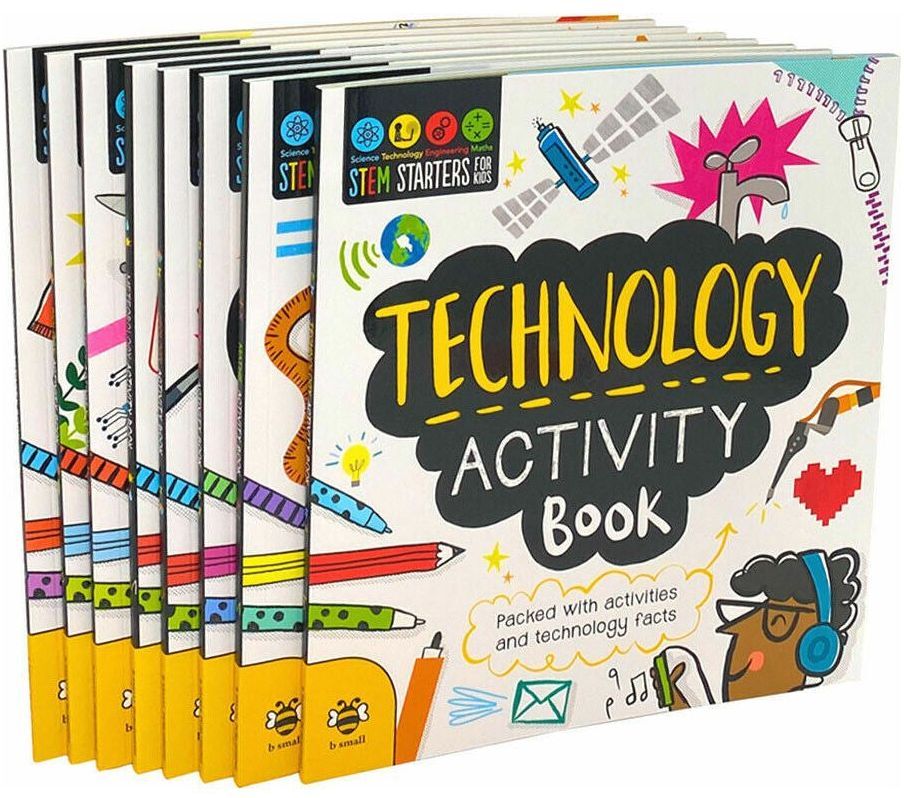
B Small Publishing STEM Educational Activity 8 Books Collection Set STEM Starters for Kids Science, Biology, Maths, Engineering, Meteorology for Early LearnersInspire curiosity and a love of learning with the STEM Educational Activity 8 Books Set, specially designed to introduce children to key STEM subjects through fun, hands-on activities. This engaging STEM Starters for Kids collection covers essential topics such as Maths, Engineering, Meteorology, and core scientific concepts, helping young learners build problem-solving skills, logical thinking, and creativity. Each book features age-appropriate explanations, interactive exercises, and simple activities that make complex ideas easy to understand. Ideal for home learning, classrooms, homeschooling, and after-school enrichment, this 8-book set supports early educational development while keeping children motivated and confident in STEM subjects. Why Parents & Educators Love This Set: 8 educational STEM activity books in one collection Introduces Maths, Engineering, Meteorology & Science Encourages critical thinking and problem-solving Hands-on activities that make learning fun Suitable for ages 5–10 Perfect for home, school, or gift giving A strong foundation for future learning, the STEM Educational Activity 8 Books Set helps children explore how the world works while developing essential academic and life skills. Science Activity Book In this particular title, little scientists will love the mix of non-fiction and activities in this educational book full of BIG ideas.Fun games and puzzles teach boys and girls about smells and taste buds, the power of magnetism, how sound travels and the different types of energy that fuel our lives and our world. Biology Activity Book Fun games and puzzles teach boys and girls about biology, plants, biomes, ecology, nature, digestion and the human body. Robotics Activity Book Fun games and puzzles teach boys and girls about robotics, automation, programming and engineering. Start a lifelong passion for STEM subjects. Meteorology Fun games and puzzles teach boys and girls about climates, the power of storms, how rain happens and the different ways of measuring the weather. Geology Fun games and puzzles teach boys and girls about rocks and fossils, the power of volcanoes, how earthquakes happen and the origin of the oil that fuels our lives and our world. Engineering Activity Book Fun games and puzzles teach boys and girls about structures that use science and technology to improve our lives. Engineering is what brings machines to life. Technology Activity Book Fun games and puzzles teach boys and girls about digital developments like mobile phones and the internet to more old-fashioned inventions like zips and door hinges. Maths Activity Book Fun games and puzzles teach boys and girls how to solve problems using addition, subtraction, multiplication and division.Maths is a huge part of science, technology and engineering.12,99 £*Shipping: 2,99 £Secure redirect to the provider
-
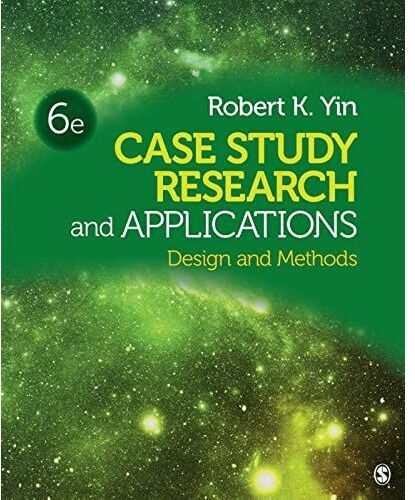
SAGE Publications Case Study Research and Applications: Design and MethodsRecognized as one of the most cited methodology books in the social sciences, the Sixth Edition of Robert K. Yin′s bestselling text provides a complete portal to the world of case study research. With the integration of 11 applications in this edition, the book gives readers access to exemplary case studies drawn from a wide variety of academic and applied fields. Ultimately, Case Study Research and Applications will guide students in the successful use and application of the case study research method.59,99 £*Shipping: 0,00 £Secure redirect to the provider
-
What is the principle of the key-lock principle?
The key-lock principle is based on the idea that certain molecules or structures (keys) can fit into specific receptors or binding sites (locks) with high specificity and affinity. This principle is commonly used to describe the interaction between enzymes and their substrates, where the enzyme (lock) has a specific active site that perfectly fits the substrate (key), allowing for efficient catalysis. The key-lock principle highlights the importance of complementary shapes and chemical properties between molecules for effective interactions to occur. **
-
What is the ping-pong principle or the hourglass principle?
The ping-pong principle, also known as the hourglass principle, is a communication strategy where information is exchanged back and forth between two parties in a structured and concise manner. It involves each party taking turns to speak or provide input, similar to a game of ping-pong. This principle ensures that communication is balanced, effective, and allows for active listening and engagement from both parties. It helps to maintain a focused and productive conversation by preventing one party from dominating the discussion. **
-
What is the rocket principle and the principle of recoil?
The rocket principle states that for every action, there is an equal and opposite reaction. This means that when a rocket expels gas out of its engines, the force of the gas pushing out is matched by an equal force pushing the rocket in the opposite direction. The principle of recoil is similar, stating that when a gun is fired, the force of the bullet being expelled from the barrel is matched by an equal force pushing the gun in the opposite direction. Both principles are based on Newton's third law of motion, which describes the relationship between the forces acting on two interacting objects. **
-
Which animal is suitable for a biology research project?
The choice of animal for a biology research project depends on the specific research question and the ethical considerations involved. For example, if the research involves studying mammalian physiology, mice or rats are commonly used due to their genetic similarity to humans. If the research focuses on behavior, social structure, or communication, animals such as primates or birds may be more suitable. It is important to consider the welfare of the animals and to use the most appropriate species for the research question while minimizing harm. **
* All prices are inclusive of VAT and, if applicable, plus shipping costs. The offer information is based on the details provided by the respective shop and is updated through automated processes. Real-time updates do not occur, so deviations can occur in individual cases. ** Note: Parts of this content were created by AI.