Buy bbio-project.eu ?
We are moving the project
bbio-project.eu .
Are you interested in purchasing the domain
bbio-project.eu ?
domain@kv-gmbh.de · 0541-91531010
Buy bbio-project.eu ?
Why does sexual reproduction have an advantage over asexual reproduction?
Sexual reproduction has an advantage over asexual reproduction because it promotes genetic diversity. Through the process of meiosis and fertilization, offspring inherit a unique combination of genes from both parents, increasing genetic variation within a population. This diversity enhances the ability of a species to adapt to changing environments and reduces the risk of genetic diseases. Additionally, sexual reproduction allows for the elimination of harmful mutations through genetic recombination, leading to healthier and more robust offspring. **
What is the significance of reproduction and inheritance in biology?
Reproduction and inheritance are fundamental concepts in biology as they are essential for the continuation of life and the passing on of genetic information from one generation to the next. Reproduction allows organisms to produce offspring, ensuring the survival of the species. Inheritance is the process by which genetic information is passed down from parents to offspring, leading to variation and evolution within populations. Understanding these processes is crucial for studying the diversity of life forms and how traits are inherited and expressed. **


Similar search terms for Reproduction
Top-Angebote
Products related to Reproduction:
-
Storied Home "Magnesia Vintage Reproduction Giraffe Calf Figurine - 13.75""L x 5.88""W x 18.13""H"Add the Magnesia Vintage Reproduction Giraffe Calf Figurine with Antique Grey Finish to any space for a captivating blend of artistry and nostalgia.71,49 $*Shipping: 0,00 $Secure redirect to the provider
-
CGP Books GCSE Combined Science: Biology AQA Revision Question Cards: superb for the 2024 and 2025 exams (CGP AQA GCSE Combined Science)It’s all very well reading through your study notes, but how much can you actually remember? Put your GCSE Biology knowledge to the test with CGP’s brilliant Revision Question Cards! There are 63 cards in the pack, covering all the key Biology topics from the Grade 9-1 AQA (Trilogy Specification) Combined Science course. Each one starts off with quick questions to warm you up, followed by harder questions to get your brain into top gear. Flip the card over and you’ll find full answers to each question, carefully written to help you understand everything you need to know. Along the way, we’ve packed in plenty of diagrams and expert revision tips, and there are even questions on Working Scientifically and Practical Skills. Amazing!6,95 £*Shipping: 2,99 £Secure redirect to the provider
-
CGP Books GCSE AQA Combined Science Revision Question Cards 3 Pack Set (Chemistry, Physics, Biology)To cut to the chase, there’s more to revision than just reading through study notes. If you really want to make sure you know GCSE Chemistry, Physics and Biology you’ll need to test yourself - and that’s where these CGP Revision Question Cards come in! There are 95 cards in the pack, covering every key Grade 9-1 AQA topic. Each one starts off with quick questions to warm you up, followed by harder questions to get your brain into top gear. Flip the card over and you’ll find full answers to each question, carefully written to help you understand everything you need to know. Along the way, we’ve packed in plenty of diagrams and expert revision tips, and there are even questions on Working Scientifically and Practical Skills. Amazing!21,99 £*Shipping: 2,99 £Secure redirect to the provider
-
Wayland ltd Comic Strip Science Series 4 Books Collection Set (Biology, Chemistry, Physics, Earth and Space)Comic Strip Science Series 4 Books Collection Set By Paul Mason (Biology, Physics, Earth and Space & Chemistry): Biology: Comic Strip Biology makes learning about the science behind animals, plants and the human body fun! Each spread in this series features a short, funny comic strip that explains a process or aspect of science. Around the strip, diagrams and panels give further information on the topic. They are a fantastic way to engage children aged 8 plus with science. Physics: Comic Strip Physics makes learning about the science behind forces, energy and simple machines fun! Each spread in this series features a short, funny comic strip that explains a process or aspect of science. Around the strip, diagrams and panels give further information on the topic. They are a fantastic way to engage children aged 8 plus with science. Earth and Space: Find out about the science behind the solar system, the big bang, gravity, black holes and much more with hilarous cartoon strips, facts and diagrams.Each spread in this series features a short, funny comic strip that explains a process or aspect of science. Around the strip, diagrams and panels give further information on the topic. They are a fantastic way to engage children aged 8 plus with science. Chemistry: Comic Strip Science: Chemistry makes learning about the science behind behind materials fun! It covers topics such as different states of matter, changing states, atoms and much more.Each spread in this series features a short, funny comic strip that explains a process or aspect of science. Around the strip, diagrams and panels give further information on the topic.12,89 £*Shipping: 2,99 £Secure redirect to the provider



-
What is cell reproduction?
Cell reproduction is the process by which cells divide and create new cells. This is essential for growth, repair, and maintenance of the body. There are two main types of cell reproduction: mitosis, which produces two identical daughter cells, and meiosis, which produces four genetically unique daughter cells. Cell reproduction is tightly regulated to ensure proper functioning of the body and to prevent diseases like cancer. **
-
What is beech reproduction?
Beech reproduction refers to the process by which beech trees produce offspring. Beech trees reproduce through seeds that are contained within small, prickly husks known as beechnuts. These seeds are dispersed by animals or the wind, and when conditions are favorable, they germinate and grow into new beech trees. Beech trees can also reproduce through root sprouts, where new trees grow from the roots of existing trees. **
-
What characterizes sexual reproduction?
Sexual reproduction is characterized by the fusion of two specialized sex cells, typically a sperm and an egg, to create a new organism. This process introduces genetic variation into the offspring, as each parent contributes a unique set of genes. Sexual reproduction also requires the involvement of two individuals, leading to a greater diversity of traits within a population. Additionally, sexual reproduction often involves the development of specialized reproductive organs and behaviors to facilitate the union of the sex cells. **
-
How did humans discover reproduction?
Humans likely discovered reproduction through observation of the natural world around them. They would have noticed that animals and plants were able to produce offspring, and through trial and error, they would have learned about the connection between sexual activity and the birth of new life. Over time, humans would have developed a deeper understanding of the reproductive process through scientific inquiry and experimentation. This knowledge would have been passed down through generations, leading to the development of more advanced reproductive technologies and understanding of human reproduction. **

Should human reproduction be controlled?
The question of whether human reproduction should be controlled is a complex and controversial issue. On one hand, some argue that controlling human reproduction is necessary to address overpopulation, reduce strain on resources, and prevent environmental degradation. On the other hand, others believe that reproductive rights are fundamental human rights and that individuals should have the freedom to make their own reproductive choices. Ultimately, the answer to this question depends on one's values, beliefs, and perspectives on individual rights versus societal needs. It is important to approach this issue with sensitivity and consideration for the diverse perspectives and implications involved. **
What is the reproduction factor 3?
The reproduction factor 3, also known as the basic reproduction number (R0), is a measure of how contagious an infectious disease is. It represents the average number of secondary infections produced by a single infected individual in a population where everyone is susceptible to the disease. A reproduction factor of 3 means that, on average, each infected person will transmit the disease to 3 other people. This value is used by epidemiologists to assess the potential for an outbreak to become an epidemic. **
Top-Angebote
Products related to Reproduction:
-
Bronzhaus Handmade Antique Reproduction Tin Model Train-1906 Steam Trains Figurine ArtworkDecorate for any table, desk, or shelf in sporty fashion with Our Rustic 1906 Steam Trains. Featuring a rustic iron frame, this charming vintage Classic Tin Model Train-1906 Steam Trains includes a fine details.109,99 $*Shipping: 0,00 $Secure redirect to the provider
-
Bronzhaus Antique Reproduction Red German Rotary Dial Phone Sculpture Figurine Decor DealDecorate for any table, desk, or shelf in sporty fashion with Our Rustic Red German Rotary Dial Phone. Featuring a rustic iron frame, this charming vintage Classic Phone includes a fine details.52,99 $*Shipping: 0,00 $Secure redirect to the provider
-
Storied Home "Magnesia Vintage Reproduction Giraffe Calf Figurine - 13.75""L x 5.88""W x 18.13""H"Add the Magnesia Vintage Reproduction Giraffe Calf Figurine with Antique Grey Finish to any space for a captivating blend of artistry and nostalgia.71,49 $*Shipping: 0,00 $Secure redirect to the provider
-
CGP Books GCSE Combined Science: Biology AQA Revision Question Cards: superb for the 2024 and 2025 exams (CGP AQA GCSE Combined Science)It’s all very well reading through your study notes, but how much can you actually remember? Put your GCSE Biology knowledge to the test with CGP’s brilliant Revision Question Cards! There are 63 cards in the pack, covering all the key Biology topics from the Grade 9-1 AQA (Trilogy Specification) Combined Science course. Each one starts off with quick questions to warm you up, followed by harder questions to get your brain into top gear. Flip the card over and you’ll find full answers to each question, carefully written to help you understand everything you need to know. Along the way, we’ve packed in plenty of diagrams and expert revision tips, and there are even questions on Working Scientifically and Practical Skills. Amazing!6,95 £*Shipping: 2,99 £Secure redirect to the provider
-
Why does sexual reproduction have an advantage over asexual reproduction?
Sexual reproduction has an advantage over asexual reproduction because it promotes genetic diversity. Through the process of meiosis and fertilization, offspring inherit a unique combination of genes from both parents, increasing genetic variation within a population. This diversity enhances the ability of a species to adapt to changing environments and reduces the risk of genetic diseases. Additionally, sexual reproduction allows for the elimination of harmful mutations through genetic recombination, leading to healthier and more robust offspring. **
-
What is the significance of reproduction and inheritance in biology?
Reproduction and inheritance are fundamental concepts in biology as they are essential for the continuation of life and the passing on of genetic information from one generation to the next. Reproduction allows organisms to produce offspring, ensuring the survival of the species. Inheritance is the process by which genetic information is passed down from parents to offspring, leading to variation and evolution within populations. Understanding these processes is crucial for studying the diversity of life forms and how traits are inherited and expressed. **
-
What is cell reproduction?
Cell reproduction is the process by which cells divide and create new cells. This is essential for growth, repair, and maintenance of the body. There are two main types of cell reproduction: mitosis, which produces two identical daughter cells, and meiosis, which produces four genetically unique daughter cells. Cell reproduction is tightly regulated to ensure proper functioning of the body and to prevent diseases like cancer. **
-
What is beech reproduction?
Beech reproduction refers to the process by which beech trees produce offspring. Beech trees reproduce through seeds that are contained within small, prickly husks known as beechnuts. These seeds are dispersed by animals or the wind, and when conditions are favorable, they germinate and grow into new beech trees. Beech trees can also reproduce through root sprouts, where new trees grow from the roots of existing trees. **
Similar search terms for Reproduction
-
CGP Books GCSE AQA Combined Science Revision Question Cards 3 Pack Set (Chemistry, Physics, Biology)To cut to the chase, there’s more to revision than just reading through study notes. If you really want to make sure you know GCSE Chemistry, Physics and Biology you’ll need to test yourself - and that’s where these CGP Revision Question Cards come in! There are 95 cards in the pack, covering every key Grade 9-1 AQA topic. Each one starts off with quick questions to warm you up, followed by harder questions to get your brain into top gear. Flip the card over and you’ll find full answers to each question, carefully written to help you understand everything you need to know. Along the way, we’ve packed in plenty of diagrams and expert revision tips, and there are even questions on Working Scientifically and Practical Skills. Amazing!21,99 £*Shipping: 2,99 £Secure redirect to the provider
-
Wayland ltd Comic Strip Science Series 4 Books Collection Set (Biology, Chemistry, Physics, Earth and Space)Comic Strip Science Series 4 Books Collection Set By Paul Mason (Biology, Physics, Earth and Space & Chemistry): Biology: Comic Strip Biology makes learning about the science behind animals, plants and the human body fun! Each spread in this series features a short, funny comic strip that explains a process or aspect of science. Around the strip, diagrams and panels give further information on the topic. They are a fantastic way to engage children aged 8 plus with science. Physics: Comic Strip Physics makes learning about the science behind forces, energy and simple machines fun! Each spread in this series features a short, funny comic strip that explains a process or aspect of science. Around the strip, diagrams and panels give further information on the topic. They are a fantastic way to engage children aged 8 plus with science. Earth and Space: Find out about the science behind the solar system, the big bang, gravity, black holes and much more with hilarous cartoon strips, facts and diagrams.Each spread in this series features a short, funny comic strip that explains a process or aspect of science. Around the strip, diagrams and panels give further information on the topic. They are a fantastic way to engage children aged 8 plus with science. Chemistry: Comic Strip Science: Chemistry makes learning about the science behind behind materials fun! It covers topics such as different states of matter, changing states, atoms and much more.Each spread in this series features a short, funny comic strip that explains a process or aspect of science. Around the strip, diagrams and panels give further information on the topic.12,89 £*Shipping: 2,99 £Secure redirect to the provider
-
Research-powered Eye Duo - Skincare Kit Charlotte Tilbury 3322 Charlotte's Research-powered Eye Duo Size:Darlings, unlock the secret to eyes that appear brighter, depuffed, smoother and younger with my Research-Powered Eye Duo! This CharlotteTilbury.com EXCLUSIVE skincare duo includes:94,05 £*Shipping: 0,00 £Secure redirect to the provider
-
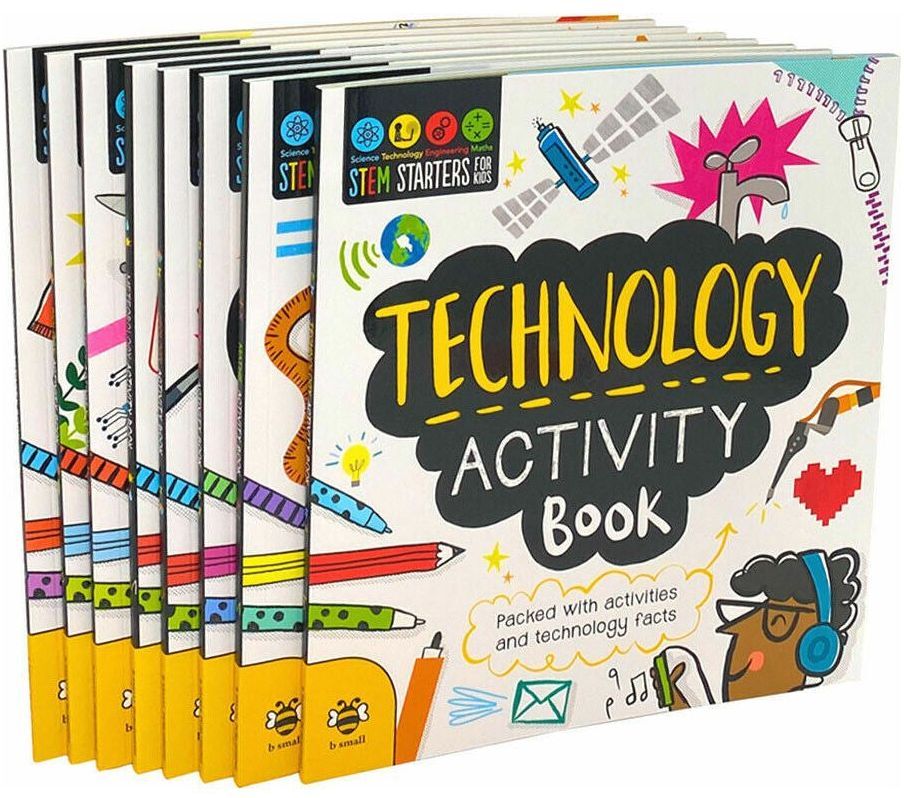
B Small Publishing STEM Educational Activity 8 Books Collection Set STEM Starters for Kids Science, Biology, Maths, Engineering, Meteorology for Early LearnersInspire curiosity and a love of learning with the STEM Educational Activity 8 Books Set, specially designed to introduce children to key STEM subjects through fun, hands-on activities. This engaging STEM Starters for Kids collection covers essential topics such as Maths, Engineering, Meteorology, and core scientific concepts, helping young learners build problem-solving skills, logical thinking, and creativity. Each book features age-appropriate explanations, interactive exercises, and simple activities that make complex ideas easy to understand. Ideal for home learning, classrooms, homeschooling, and after-school enrichment, this 8-book set supports early educational development while keeping children motivated and confident in STEM subjects. Why Parents & Educators Love This Set: 8 educational STEM activity books in one collection Introduces Maths, Engineering, Meteorology & Science Encourages critical thinking and problem-solving Hands-on activities that make learning fun Suitable for ages 5–10 Perfect for home, school, or gift giving A strong foundation for future learning, the STEM Educational Activity 8 Books Set helps children explore how the world works while developing essential academic and life skills. Science Activity Book In this particular title, little scientists will love the mix of non-fiction and activities in this educational book full of BIG ideas.Fun games and puzzles teach boys and girls about smells and taste buds, the power of magnetism, how sound travels and the different types of energy that fuel our lives and our world. Biology Activity Book Fun games and puzzles teach boys and girls about biology, plants, biomes, ecology, nature, digestion and the human body. Robotics Activity Book Fun games and puzzles teach boys and girls about robotics, automation, programming and engineering. Start a lifelong passion for STEM subjects. Meteorology Fun games and puzzles teach boys and girls about climates, the power of storms, how rain happens and the different ways of measuring the weather. Geology Fun games and puzzles teach boys and girls about rocks and fossils, the power of volcanoes, how earthquakes happen and the origin of the oil that fuels our lives and our world. Engineering Activity Book Fun games and puzzles teach boys and girls about structures that use science and technology to improve our lives. Engineering is what brings machines to life. Technology Activity Book Fun games and puzzles teach boys and girls about digital developments like mobile phones and the internet to more old-fashioned inventions like zips and door hinges. Maths Activity Book Fun games and puzzles teach boys and girls how to solve problems using addition, subtraction, multiplication and division.Maths is a huge part of science, technology and engineering.12,99 £*Shipping: 2,99 £Secure redirect to the provider
-
What characterizes sexual reproduction?
Sexual reproduction is characterized by the fusion of two specialized sex cells, typically a sperm and an egg, to create a new organism. This process introduces genetic variation into the offspring, as each parent contributes a unique set of genes. Sexual reproduction also requires the involvement of two individuals, leading to a greater diversity of traits within a population. Additionally, sexual reproduction often involves the development of specialized reproductive organs and behaviors to facilitate the union of the sex cells. **
-
How did humans discover reproduction?
Humans likely discovered reproduction through observation of the natural world around them. They would have noticed that animals and plants were able to produce offspring, and through trial and error, they would have learned about the connection between sexual activity and the birth of new life. Over time, humans would have developed a deeper understanding of the reproductive process through scientific inquiry and experimentation. This knowledge would have been passed down through generations, leading to the development of more advanced reproductive technologies and understanding of human reproduction. **
-
Should human reproduction be controlled?
The question of whether human reproduction should be controlled is a complex and controversial issue. On one hand, some argue that controlling human reproduction is necessary to address overpopulation, reduce strain on resources, and prevent environmental degradation. On the other hand, others believe that reproductive rights are fundamental human rights and that individuals should have the freedom to make their own reproductive choices. Ultimately, the answer to this question depends on one's values, beliefs, and perspectives on individual rights versus societal needs. It is important to approach this issue with sensitivity and consideration for the diverse perspectives and implications involved. **
-
What is the reproduction factor 3?
The reproduction factor 3, also known as the basic reproduction number (R0), is a measure of how contagious an infectious disease is. It represents the average number of secondary infections produced by a single infected individual in a population where everyone is susceptible to the disease. A reproduction factor of 3 means that, on average, each infected person will transmit the disease to 3 other people. This value is used by epidemiologists to assess the potential for an outbreak to become an epidemic. **
* All prices are inclusive of VAT and, if applicable, plus shipping costs. The offer information is based on the details provided by the respective shop and is updated through automated processes. Real-time updates do not occur, so deviations can occur in individual cases. ** Note: Parts of this content were created by AI.