Buy bbio-project.eu ?
We are moving the project
bbio-project.eu .
Are you interested in purchasing the domain
bbio-project.eu ?
domain@kv-gmbh.de · 0541-91531010
Buy bbio-project.eu ?
What is robotics?
Robotics is a branch of technology that deals with the design, construction, operation, and application of robots. Robots are programmable machines that can perform tasks autonomously or semi-autonomously. Robotics combines elements of mechanical engineering, electrical engineering, and computer science to create machines that can assist humans in various tasks, from manufacturing to space exploration. The field of robotics is constantly evolving, with advancements in artificial intelligence and machine learning leading to more sophisticated and versatile robots. **
How can one get into robotics?
One can get into robotics by starting with a strong foundation in science, technology, engineering, and mathematics (STEM) subjects. Pursuing a degree in robotics, mechanical engineering, electrical engineering, or computer science can provide the necessary knowledge and skills. Additionally, gaining hands-on experience through internships, projects, or participating in robotics competitions can help build practical skills and network with professionals in the field. Staying updated on the latest advancements in robotics technology and continuously learning and experimenting with different robotics platforms can also help one get into robotics. **


Similar search terms for Robotics
Top-Angebote
Products related to Robotics:
-
CGP Books GCSE Combined Science: Biology AQA Revision Question Cards: superb for the 2024 and 2025 exams (CGP AQA GCSE Combined Science)It’s all very well reading through your study notes, but how much can you actually remember? Put your GCSE Biology knowledge to the test with CGP’s brilliant Revision Question Cards! There are 63 cards in the pack, covering all the key Biology topics from the Grade 9-1 AQA (Trilogy Specification) Combined Science course. Each one starts off with quick questions to warm you up, followed by harder questions to get your brain into top gear. Flip the card over and you’ll find full answers to each question, carefully written to help you understand everything you need to know. Along the way, we’ve packed in plenty of diagrams and expert revision tips, and there are even questions on Working Scientifically and Practical Skills. Amazing!6,95 £*Shipping: 2,99 £Secure redirect to the provider
-
CGP Books GCSE AQA Combined Science Revision Question Cards 3 Pack Set (Chemistry, Physics, Biology)To cut to the chase, there’s more to revision than just reading through study notes. If you really want to make sure you know GCSE Chemistry, Physics and Biology you’ll need to test yourself - and that’s where these CGP Revision Question Cards come in! There are 95 cards in the pack, covering every key Grade 9-1 AQA topic. Each one starts off with quick questions to warm you up, followed by harder questions to get your brain into top gear. Flip the card over and you’ll find full answers to each question, carefully written to help you understand everything you need to know. Along the way, we’ve packed in plenty of diagrams and expert revision tips, and there are even questions on Working Scientifically and Practical Skills. Amazing!21,99 £*Shipping: 2,99 £Secure redirect to the provider
-
Wayland ltd Comic Strip Science Series 4 Books Collection Set (Biology, Chemistry, Physics, Earth and Space)Comic Strip Science Series 4 Books Collection Set By Paul Mason (Biology, Physics, Earth and Space & Chemistry): Biology: Comic Strip Biology makes learning about the science behind animals, plants and the human body fun! Each spread in this series features a short, funny comic strip that explains a process or aspect of science. Around the strip, diagrams and panels give further information on the topic. They are a fantastic way to engage children aged 8 plus with science. Physics: Comic Strip Physics makes learning about the science behind forces, energy and simple machines fun! Each spread in this series features a short, funny comic strip that explains a process or aspect of science. Around the strip, diagrams and panels give further information on the topic. They are a fantastic way to engage children aged 8 plus with science. Earth and Space: Find out about the science behind the solar system, the big bang, gravity, black holes and much more with hilarous cartoon strips, facts and diagrams.Each spread in this series features a short, funny comic strip that explains a process or aspect of science. Around the strip, diagrams and panels give further information on the topic. They are a fantastic way to engage children aged 8 plus with science. Chemistry: Comic Strip Science: Chemistry makes learning about the science behind behind materials fun! It covers topics such as different states of matter, changing states, atoms and much more.Each spread in this series features a short, funny comic strip that explains a process or aspect of science. Around the strip, diagrams and panels give further information on the topic.12,89 £*Shipping: 2,99 £Secure redirect to the provider
-
Research-powered Eye Duo - Skincare Kit Charlotte Tilbury 3322 Charlotte's Research-powered Eye Duo Size:Darlings, unlock the secret to eyes that appear brighter, depuffed, smoother and younger with my Research-Powered Eye Duo! This CharlotteTilbury.com EXCLUSIVE skincare duo includes:94,05 £*Shipping: 0,00 £Secure redirect to the provider


-
What is behavior planning in robotics?
Behavior planning in robotics is the process of determining the sequence of actions that a robot should take to achieve a specific goal. It involves creating a plan that outlines the steps the robot needs to follow to navigate its environment, avoid obstacles, and interact with objects. This planning typically takes into account the robot's sensors, its capabilities, and the task it needs to accomplish. By carefully designing behavior plans, robots can efficiently and effectively perform tasks in various environments. **
-
What experiences are there in studying robotics?
Studying robotics involves a combination of theoretical knowledge and hands-on practical experience. Students often have the opportunity to work on projects that involve designing, building, and programming robots. They may also participate in competitions or internships to gain real-world experience in the field. Additionally, studying robotics can involve collaborating with peers and experts in related fields, such as computer science, engineering, and artificial intelligence, to solve complex problems and push the boundaries of technology. **
-
Are the laws of robotics application-specific?
The laws of robotics, as originally proposed by Isaac Asimov, are general principles intended to guide the behavior of robots in a wide range of situations. They are not inherently application-specific, but rather provide a framework for ethical and safe robot behavior in various contexts. However, the implementation and interpretation of these laws may vary depending on the specific application or industry in which the robots are being used. Ultimately, it is up to designers, engineers, and policymakers to adapt and apply the laws of robotics to suit the needs of different applications. **
-
Which book about robotics can you recommend?
I recommend "Robotics: Everything You Need to Know About Robotics from Beginner to Expert" by Peter Mckinnon. This book provides a comprehensive overview of robotics, covering topics such as the history of robotics, different types of robots, and the future of robotics. It is suitable for both beginners and experts, making it a great resource for anyone interested in learning more about robotics. **

How do you program and build robots in robotics?
In robotics, programming and building robots involves several steps. First, you need to design the robot's structure and components using software like CAD. Then, you have to select the appropriate sensors, actuators, and microcontrollers based on the robot's intended function. Next, you write the code to control the robot's movements and interactions with its environment. Finally, you assemble the physical components according to your design and test the robot to ensure it functions as intended. Throughout the process, problem-solving skills and attention to detail are crucial for successful robot programming and building. **
Is robotics and autonomous driving a form of education?
Robotics and autonomous driving can be considered a form of education in the sense that they involve learning and understanding complex technologies and systems. Engaging with robotics and autonomous driving can provide individuals with practical, hands-on experience in engineering, programming, and problem-solving. Additionally, these fields often require continuous learning and adaptation to new advancements, making them a form of ongoing education for those involved in the industry. Overall, while not traditional forms of education, robotics and autonomous driving can certainly be seen as educational opportunities for those interested in technology and innovation. **
Top-Angebote
Products related to Robotics:
-
Neato Robotics D750 Robot Vacuum CleanerThis Exclusive Package additionally includes: 1x ultimate pet brush, 2x filters, 1x cleaning tool, 1 side brush. Pet hair, dust and allergens that linger in the home are first to go - the exclusive D-Shape design mimics corners of your home for a precise clean that round-shaped robotic vacuums simply can't do. Protect valuable decor, pet bowls or heavy messes by creating "no-go" lines through the app which work as virtual boundaries so that the automatic vacuum knows what objects or areas to avoid. Choose your clean - the Eco option gives a longer, quieter energy-saving clean while Turbo option provides a super-powered cleaning, with maximum hair pickup for a deeper clean. Even with 120 minutes of run time per charge, Charge Time: Up to 150 minutes, the smart vacuum cleaner always goes back to its base to recharge if needed and picks up directly where it left off until the job is done Neato Robotics customer service is available 24/7 on the following number : +44 20 33 18 29 95.406,99 £*Shipping: 0,00 £Secure redirect to the provider
-
York Wallcoverings Beige Robotics Peel and Stick WallpaperA simple drawing of robotic parts become line art in pattern Robotics. This Robotics Peel & Stick Wallpaper measures approximately 27 inches wide by 20 feet long, covering About 45 square feet per roll.59,50 $*Shipping: 0,00 $Secure redirect to the provider
-
CGP Books GCSE Combined Science: Biology AQA Revision Question Cards: superb for the 2024 and 2025 exams (CGP AQA GCSE Combined Science)It’s all very well reading through your study notes, but how much can you actually remember? Put your GCSE Biology knowledge to the test with CGP’s brilliant Revision Question Cards! There are 63 cards in the pack, covering all the key Biology topics from the Grade 9-1 AQA (Trilogy Specification) Combined Science course. Each one starts off with quick questions to warm you up, followed by harder questions to get your brain into top gear. Flip the card over and you’ll find full answers to each question, carefully written to help you understand everything you need to know. Along the way, we’ve packed in plenty of diagrams and expert revision tips, and there are even questions on Working Scientifically and Practical Skills. Amazing!6,95 £*Shipping: 2,99 £Secure redirect to the provider
-
CGP Books GCSE AQA Combined Science Revision Question Cards 3 Pack Set (Chemistry, Physics, Biology)To cut to the chase, there’s more to revision than just reading through study notes. If you really want to make sure you know GCSE Chemistry, Physics and Biology you’ll need to test yourself - and that’s where these CGP Revision Question Cards come in! There are 95 cards in the pack, covering every key Grade 9-1 AQA topic. Each one starts off with quick questions to warm you up, followed by harder questions to get your brain into top gear. Flip the card over and you’ll find full answers to each question, carefully written to help you understand everything you need to know. Along the way, we’ve packed in plenty of diagrams and expert revision tips, and there are even questions on Working Scientifically and Practical Skills. Amazing!21,99 £*Shipping: 2,99 £Secure redirect to the provider
-
What is robotics?
Robotics is a branch of technology that deals with the design, construction, operation, and application of robots. Robots are programmable machines that can perform tasks autonomously or semi-autonomously. Robotics combines elements of mechanical engineering, electrical engineering, and computer science to create machines that can assist humans in various tasks, from manufacturing to space exploration. The field of robotics is constantly evolving, with advancements in artificial intelligence and machine learning leading to more sophisticated and versatile robots. **
-
How can one get into robotics?
One can get into robotics by starting with a strong foundation in science, technology, engineering, and mathematics (STEM) subjects. Pursuing a degree in robotics, mechanical engineering, electrical engineering, or computer science can provide the necessary knowledge and skills. Additionally, gaining hands-on experience through internships, projects, or participating in robotics competitions can help build practical skills and network with professionals in the field. Staying updated on the latest advancements in robotics technology and continuously learning and experimenting with different robotics platforms can also help one get into robotics. **
-
What is behavior planning in robotics?
Behavior planning in robotics is the process of determining the sequence of actions that a robot should take to achieve a specific goal. It involves creating a plan that outlines the steps the robot needs to follow to navigate its environment, avoid obstacles, and interact with objects. This planning typically takes into account the robot's sensors, its capabilities, and the task it needs to accomplish. By carefully designing behavior plans, robots can efficiently and effectively perform tasks in various environments. **
-
What experiences are there in studying robotics?
Studying robotics involves a combination of theoretical knowledge and hands-on practical experience. Students often have the opportunity to work on projects that involve designing, building, and programming robots. They may also participate in competitions or internships to gain real-world experience in the field. Additionally, studying robotics can involve collaborating with peers and experts in related fields, such as computer science, engineering, and artificial intelligence, to solve complex problems and push the boundaries of technology. **
Similar search terms for Robotics
-
Wayland ltd Comic Strip Science Series 4 Books Collection Set (Biology, Chemistry, Physics, Earth and Space)Comic Strip Science Series 4 Books Collection Set By Paul Mason (Biology, Physics, Earth and Space & Chemistry): Biology: Comic Strip Biology makes learning about the science behind animals, plants and the human body fun! Each spread in this series features a short, funny comic strip that explains a process or aspect of science. Around the strip, diagrams and panels give further information on the topic. They are a fantastic way to engage children aged 8 plus with science. Physics: Comic Strip Physics makes learning about the science behind forces, energy and simple machines fun! Each spread in this series features a short, funny comic strip that explains a process or aspect of science. Around the strip, diagrams and panels give further information on the topic. They are a fantastic way to engage children aged 8 plus with science. Earth and Space: Find out about the science behind the solar system, the big bang, gravity, black holes and much more with hilarous cartoon strips, facts and diagrams.Each spread in this series features a short, funny comic strip that explains a process or aspect of science. Around the strip, diagrams and panels give further information on the topic. They are a fantastic way to engage children aged 8 plus with science. Chemistry: Comic Strip Science: Chemistry makes learning about the science behind behind materials fun! It covers topics such as different states of matter, changing states, atoms and much more.Each spread in this series features a short, funny comic strip that explains a process or aspect of science. Around the strip, diagrams and panels give further information on the topic.12,89 £*Shipping: 2,99 £Secure redirect to the provider
-
Research-powered Eye Duo - Skincare Kit Charlotte Tilbury 3322 Charlotte's Research-powered Eye Duo Size:Darlings, unlock the secret to eyes that appear brighter, depuffed, smoother and younger with my Research-Powered Eye Duo! This CharlotteTilbury.com EXCLUSIVE skincare duo includes:94,05 £*Shipping: 0,00 £Secure redirect to the provider
-
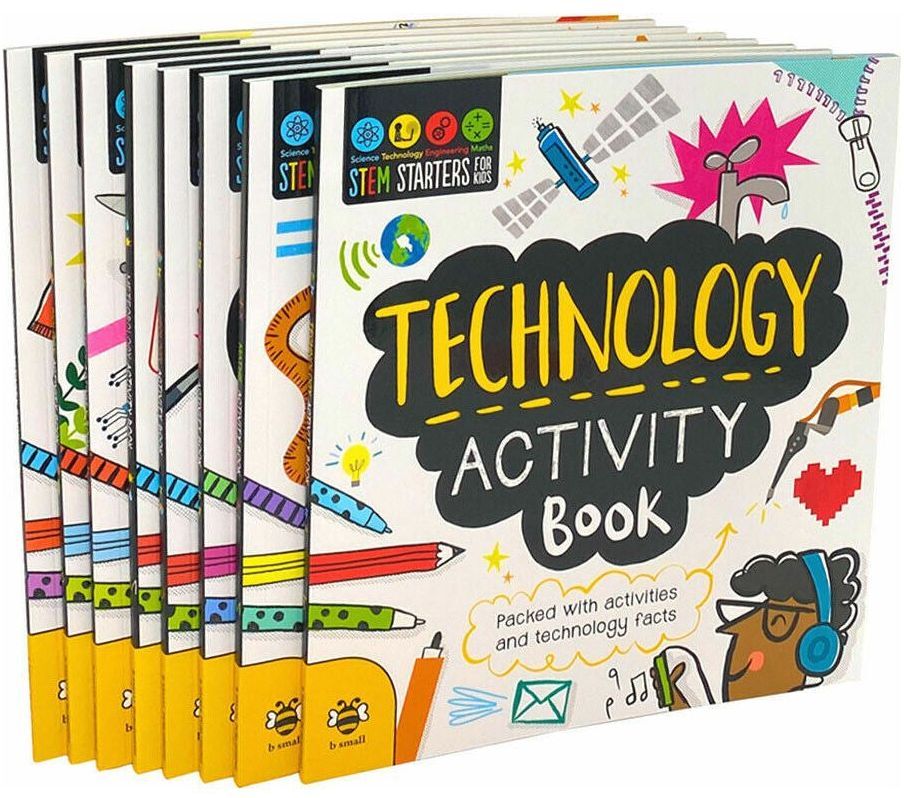
B Small Publishing STEM Educational Activity 8 Books Collection Set STEM Starters for Kids Science, Biology, Maths, Engineering, Meteorology for Early LearnersInspire curiosity and a love of learning with the STEM Educational Activity 8 Books Set, specially designed to introduce children to key STEM subjects through fun, hands-on activities. This engaging STEM Starters for Kids collection covers essential topics such as Maths, Engineering, Meteorology, and core scientific concepts, helping young learners build problem-solving skills, logical thinking, and creativity. Each book features age-appropriate explanations, interactive exercises, and simple activities that make complex ideas easy to understand. Ideal for home learning, classrooms, homeschooling, and after-school enrichment, this 8-book set supports early educational development while keeping children motivated and confident in STEM subjects. Why Parents & Educators Love This Set: 8 educational STEM activity books in one collection Introduces Maths, Engineering, Meteorology & Science Encourages critical thinking and problem-solving Hands-on activities that make learning fun Suitable for ages 5–10 Perfect for home, school, or gift giving A strong foundation for future learning, the STEM Educational Activity 8 Books Set helps children explore how the world works while developing essential academic and life skills. Science Activity Book In this particular title, little scientists will love the mix of non-fiction and activities in this educational book full of BIG ideas.Fun games and puzzles teach boys and girls about smells and taste buds, the power of magnetism, how sound travels and the different types of energy that fuel our lives and our world. Biology Activity Book Fun games and puzzles teach boys and girls about biology, plants, biomes, ecology, nature, digestion and the human body. Robotics Activity Book Fun games and puzzles teach boys and girls about robotics, automation, programming and engineering. Start a lifelong passion for STEM subjects. Meteorology Fun games and puzzles teach boys and girls about climates, the power of storms, how rain happens and the different ways of measuring the weather. Geology Fun games and puzzles teach boys and girls about rocks and fossils, the power of volcanoes, how earthquakes happen and the origin of the oil that fuels our lives and our world. Engineering Activity Book Fun games and puzzles teach boys and girls about structures that use science and technology to improve our lives. Engineering is what brings machines to life. Technology Activity Book Fun games and puzzles teach boys and girls about digital developments like mobile phones and the internet to more old-fashioned inventions like zips and door hinges. Maths Activity Book Fun games and puzzles teach boys and girls how to solve problems using addition, subtraction, multiplication and division.Maths is a huge part of science, technology and engineering.12,99 £*Shipping: 2,99 £Secure redirect to the provider
-
York Wallcoverings Grey Robotics Peel and Stick WallpaperA simple drawing of robotic parts become line art in pattern Robotics. This Robotics Peel & Stick Wallpaper measures approximately 27 inches wide by 20 feet long, covering About 45 square feet per roll.53,99 $*Shipping: 0,00 $Secure redirect to the provider
-
Are the laws of robotics application-specific?
The laws of robotics, as originally proposed by Isaac Asimov, are general principles intended to guide the behavior of robots in a wide range of situations. They are not inherently application-specific, but rather provide a framework for ethical and safe robot behavior in various contexts. However, the implementation and interpretation of these laws may vary depending on the specific application or industry in which the robots are being used. Ultimately, it is up to designers, engineers, and policymakers to adapt and apply the laws of robotics to suit the needs of different applications. **
-
Which book about robotics can you recommend?
I recommend "Robotics: Everything You Need to Know About Robotics from Beginner to Expert" by Peter Mckinnon. This book provides a comprehensive overview of robotics, covering topics such as the history of robotics, different types of robots, and the future of robotics. It is suitable for both beginners and experts, making it a great resource for anyone interested in learning more about robotics. **
-
How do you program and build robots in robotics?
In robotics, programming and building robots involves several steps. First, you need to design the robot's structure and components using software like CAD. Then, you have to select the appropriate sensors, actuators, and microcontrollers based on the robot's intended function. Next, you write the code to control the robot's movements and interactions with its environment. Finally, you assemble the physical components according to your design and test the robot to ensure it functions as intended. Throughout the process, problem-solving skills and attention to detail are crucial for successful robot programming and building. **
-
Is robotics and autonomous driving a form of education?
Robotics and autonomous driving can be considered a form of education in the sense that they involve learning and understanding complex technologies and systems. Engaging with robotics and autonomous driving can provide individuals with practical, hands-on experience in engineering, programming, and problem-solving. Additionally, these fields often require continuous learning and adaptation to new advancements, making them a form of ongoing education for those involved in the industry. Overall, while not traditional forms of education, robotics and autonomous driving can certainly be seen as educational opportunities for those interested in technology and innovation. **
* All prices are inclusive of VAT and, if applicable, plus shipping costs. The offer information is based on the details provided by the respective shop and is updated through automated processes. Real-time updates do not occur, so deviations can occur in individual cases. ** Note: Parts of this content were created by AI.