Buy bbio-project.eu ?
We are moving the project
bbio-project.eu .
Are you interested in purchasing the domain
bbio-project.eu ?
domain@kv-gmbh.de · 0541-91531010
Buy bbio-project.eu ?
What is the significance of bacteria in biology?
Bacteria play a crucial role in various biological processes. They are essential for nutrient cycling, decomposition, and maintaining ecological balance in ecosystems. Bacteria also have a significant impact on human health, as they can be both beneficial, such as in the gut microbiome, and harmful, causing diseases. Studying bacteria is important for understanding evolution, genetics, and biochemistry, making them a fundamental component of biology. **
Why are bacteria particularly suitable as research subjects?
Bacteria are particularly suitable as research subjects because they have simple and well-understood genetic systems, making them ideal for studying basic biological processes. They have rapid growth rates, allowing for quick generation of results and data. Additionally, bacteria are easy to manipulate genetically, enabling researchers to introduce specific mutations and study their effects. Overall, bacteria serve as valuable model organisms for a wide range of research studies in fields such as genetics, molecular biology, and biotechnology. **

Similar search terms for Bacteria
Top-Angebote
Products related to Bacteria:
-
iSpring FC15-BV Replacement Water Filter, CTO + Pleated Water Filter Cartridge for US31-BV & CW31-BV, Removes Bacteria & VirusesFeatures: Bacteria & Virus Removal: Lasts up to 12 months, the FC15-BV water filter replacement combines a pleated filter with activated carbon (CTO) to deliver superior filtration performance.62,99 $*Shipping: 0,00 $Secure redirect to the provider
-
Dettol Spray, Bathroom Cleaner, 1L, Limescale Remover, Sparkling Clean, Tackles Grease and Grime, No Need to Rinse, Kills 99.9 Percent of Bacteria andKILLS 99.9 PERCENT OF BACTERIA AND ENVELOPED VIRUSES: Always reads the label and product information before use. 10X CLEANING POWER: On Soapscum vs water; this powerful cleaner cuts through the toughest grease, grime and dirt for a quicker and highly effective clean. REMOVES LIMESCALE: The active oxygen formula penetrates and dissolves tough grease, dirt, and limescale. SUITABLE FOR: Bathroom sinks, taps, toilet seat & bowl, shower screens, vinyl, sealed, laminated and linoleum floors. HOW TO USE: Simply spray directly on the surface, wipe over with clean damp cloth and allow to dry, no need to rinse. NOT SUITABLE FOR: Marble, brass, copper, unfinished wood, carpet, fabrics, and unwaxed vinyl. Packaging may vary. No harsh chemical residue. Kills 99.9% of bacteria. With active oxygen19,49 £*Shipping: 0,00 £Secure redirect to the provider
-
CGP Books GCSE Combined Science: Biology AQA Revision Question Cards: superb for the 2024 and 2025 exams (CGP AQA GCSE Combined Science)It’s all very well reading through your study notes, but how much can you actually remember? Put your GCSE Biology knowledge to the test with CGP’s brilliant Revision Question Cards! There are 63 cards in the pack, covering all the key Biology topics from the Grade 9-1 AQA (Trilogy Specification) Combined Science course. Each one starts off with quick questions to warm you up, followed by harder questions to get your brain into top gear. Flip the card over and you’ll find full answers to each question, carefully written to help you understand everything you need to know. Along the way, we’ve packed in plenty of diagrams and expert revision tips, and there are even questions on Working Scientifically and Practical Skills. Amazing!6,95 £*Shipping: 2,99 £Secure redirect to the provider
-
CGP Books GCSE AQA Combined Science Revision Question Cards 3 Pack Set (Chemistry, Physics, Biology)To cut to the chase, there’s more to revision than just reading through study notes. If you really want to make sure you know GCSE Chemistry, Physics and Biology you’ll need to test yourself - and that’s where these CGP Revision Question Cards come in! There are 95 cards in the pack, covering every key Grade 9-1 AQA topic. Each one starts off with quick questions to warm you up, followed by harder questions to get your brain into top gear. Flip the card over and you’ll find full answers to each question, carefully written to help you understand everything you need to know. Along the way, we’ve packed in plenty of diagrams and expert revision tips, and there are even questions on Working Scientifically and Practical Skills. Amazing!21,99 £*Shipping: 2,99 £Secure redirect to the provider


-
Why are bacteria particularly suitable subjects for experimentation in biotechnology and genetics?
Bacteria are particularly suitable subjects for experimentation in biotechnology and genetics for several reasons. Firstly, they have a rapid growth rate, allowing for quick and efficient experimentation. Additionally, their simple genetic makeup and ease of genetic manipulation make them ideal for studying gene function and regulation. Furthermore, bacteria can be used to produce valuable proteins and other biotechnological products through genetic engineering, making them valuable tools for biotechnological applications. Overall, their simplicity, rapid growth, and genetic manipulability make bacteria ideal subjects for experimentation in biotechnology and genetics. **
-
What could these be for germs/bacteria? (Biology, see pictures)
These pictures could be of various types of bacteria or germs. The first image appears to be a cluster of rod-shaped bacteria, possibly belonging to the genus Bacillus or Clostridium. The second image shows spherical bacteria, which could be from the genus Staphylococcus or Streptococcus. The third image depicts spiral-shaped bacteria, which may belong to the genus Helicobacter or Borrelia. These bacteria can cause a range of infections and diseases in humans and other organisms. **
-
What is the relationship between bacteria and antibiotics in biology?
Bacteria and antibiotics have a complex relationship in biology. Antibiotics are drugs that are used to kill or inhibit the growth of bacteria, and they have been a crucial tool in treating bacterial infections. However, overuse and misuse of antibiotics have led to the development of antibiotic-resistant bacteria, which poses a significant threat to public health. This has led to a constant arms race between the development of new antibiotics and the evolution of antibiotic-resistant bacteria. Understanding this relationship is crucial for developing effective strategies to combat antibiotic resistance and to ensure the continued effectiveness of antibiotics in treating bacterial infections. **
-
Why are bacteria particularly suitable as research subjects in genetics?
Bacteria are particularly suitable as research subjects in genetics because they have a simple and well-understood genetic makeup, making it easier to study and manipulate their genes. They have a rapid reproduction rate, allowing for quick generation of large populations for genetic studies. Bacteria also have plasmids, which are small, circular DNA molecules that can be easily manipulated and transferred between different bacterial strains, making them valuable tools for genetic research. Additionally, bacteria are relatively easy and inexpensive to culture in the laboratory, making them accessible for a wide range of genetic studies. **

Who invented bacteria?
The discovery of bacteria is attributed to Dutch scientist Antonie van Leeuwenhoek. He is considered the "Father of Microbiology" and is credited with being the first person to observe and document bacteria using a microscope in the 17th century. **
Are bacteria protists?
No, bacteria are not protists. Bacteria are single-celled microorganisms that lack a nucleus and other membrane-bound organelles, and they belong to the domain Bacteria. On the other hand, protists are a diverse group of eukaryotic microorganisms that can be single-celled or multicellular, and they belong to the domain Eukarya. Therefore, bacteria and protists are two distinct groups of microorganisms with different characteristics and evolutionary histories. **
Top-Angebote
Products related to Bacteria:
-
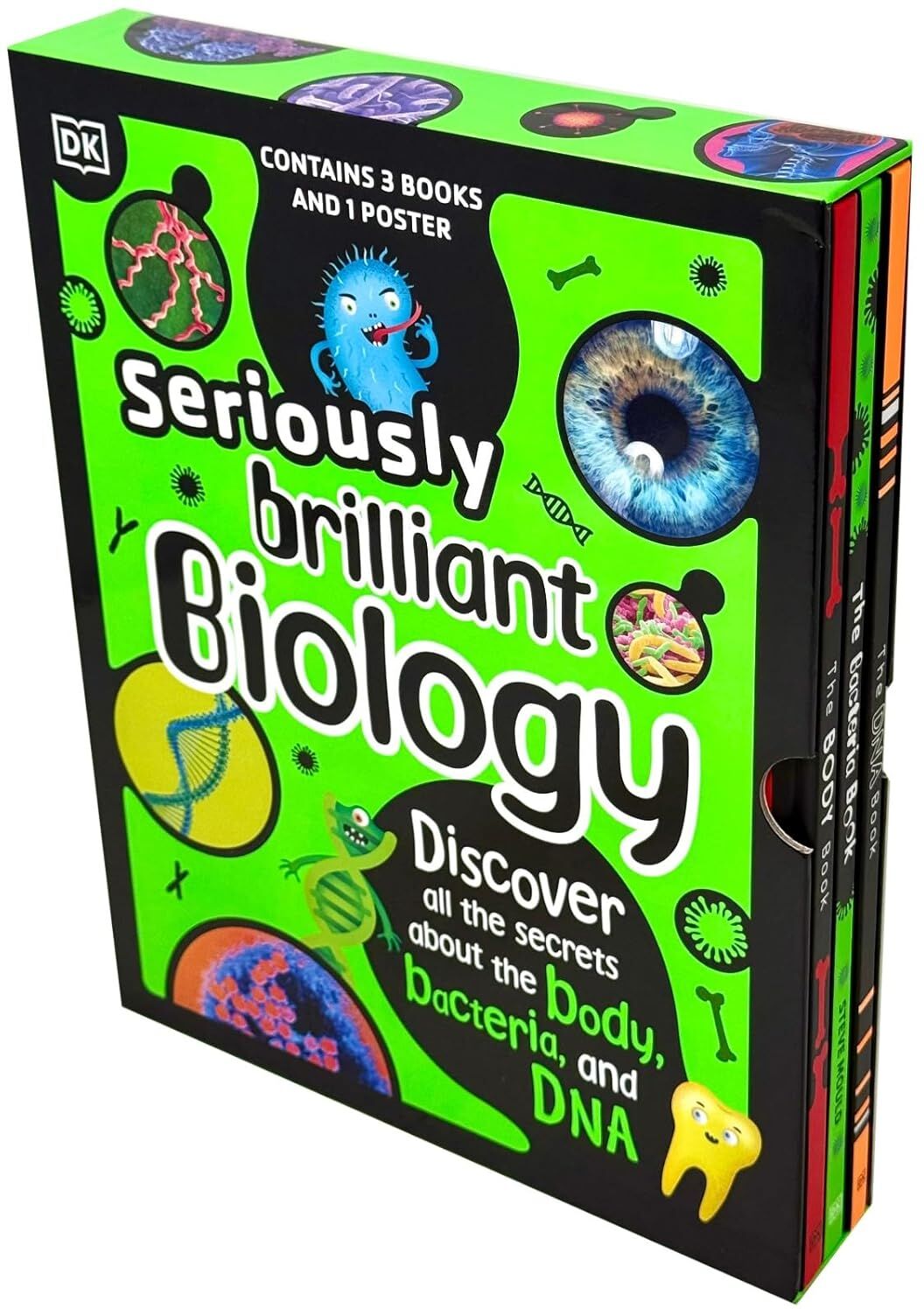
DK Children DK Seriously Brilliant Biology 3 Books Box Set and 1 Poster (The Body Book, The DNA Book and The Bacteria Book)The Body Book: It's inside every living plant and animal, from the tiniest seed to the person standing next to you, but how much do you know about DNA? This book gives children an in-depth look at DNA and its role in all living things--from why we have different-colored eyes to why we age. Discover what DNA is, what it does, and how it shapes our lives, including inheritance and why we look like our parents; forensic science and how DNA evidence helps catch criminals; and genetic engineering and if we could bring dinosaurs back to life. With fun illustrated DNA characters, clear diagrams, and astonishing photographs, children will love learning about themselves and this all-important molecule. The Body Book : Your body is awe-inspiring, amazing and miraculous. Your heart pumps blood all around your body to keep you alive and carry you around every single day. It keeps you alive and carries you around every day. But how much do you really know about what's going on beneath the surface? Jump on board as DK takes you on a fun-filled journey under your skin, through your insides, and back in time to explore milestones in medicine and the latest scientific discoveries about the human body. Are you coming? The Bacteria Book: What do glowing squid, mouldy bread, and soil creatures all have in common? They're all part of the world of microbiology! In this awesome introductory book for budding scientists, the big world of tiny organisms is revealed with remarkable photography, kooky characters, and lots of fun facts.12,99 £*Shipping: 2,99 £Secure redirect to the provider
-
iSpring FC15-BV Replacement Water Filter, CTO + Pleated Water Filter Cartridge for US31-BV & CW31-BV, Removes Bacteria & VirusesFeatures: Bacteria & Virus Removal: Lasts up to 12 months, the FC15-BV water filter replacement combines a pleated filter with activated carbon (CTO) to deliver superior filtration performance.62,99 $*Shipping: 0,00 $Secure redirect to the provider
-
Dettol Spray, Bathroom Cleaner, 1L, Limescale Remover, Sparkling Clean, Tackles Grease and Grime, No Need to Rinse, Kills 99.9 Percent of Bacteria andKILLS 99.9 PERCENT OF BACTERIA AND ENVELOPED VIRUSES: Always reads the label and product information before use. 10X CLEANING POWER: On Soapscum vs water; this powerful cleaner cuts through the toughest grease, grime and dirt for a quicker and highly effective clean. REMOVES LIMESCALE: The active oxygen formula penetrates and dissolves tough grease, dirt, and limescale. SUITABLE FOR: Bathroom sinks, taps, toilet seat & bowl, shower screens, vinyl, sealed, laminated and linoleum floors. HOW TO USE: Simply spray directly on the surface, wipe over with clean damp cloth and allow to dry, no need to rinse. NOT SUITABLE FOR: Marble, brass, copper, unfinished wood, carpet, fabrics, and unwaxed vinyl. Packaging may vary. No harsh chemical residue. Kills 99.9% of bacteria. With active oxygen19,49 £*Shipping: 0,00 £Secure redirect to the provider
-
What is the significance of bacteria in biology?
Bacteria play a crucial role in various biological processes. They are essential for nutrient cycling, decomposition, and maintaining ecological balance in ecosystems. Bacteria also have a significant impact on human health, as they can be both beneficial, such as in the gut microbiome, and harmful, causing diseases. Studying bacteria is important for understanding evolution, genetics, and biochemistry, making them a fundamental component of biology. **
-
Why are bacteria particularly suitable as research subjects?
Bacteria are particularly suitable as research subjects because they have simple and well-understood genetic systems, making them ideal for studying basic biological processes. They have rapid growth rates, allowing for quick generation of results and data. Additionally, bacteria are easy to manipulate genetically, enabling researchers to introduce specific mutations and study their effects. Overall, bacteria serve as valuable model organisms for a wide range of research studies in fields such as genetics, molecular biology, and biotechnology. **
-
Why are bacteria particularly suitable subjects for experimentation in biotechnology and genetics?
Bacteria are particularly suitable subjects for experimentation in biotechnology and genetics for several reasons. Firstly, they have a rapid growth rate, allowing for quick and efficient experimentation. Additionally, their simple genetic makeup and ease of genetic manipulation make them ideal for studying gene function and regulation. Furthermore, bacteria can be used to produce valuable proteins and other biotechnological products through genetic engineering, making them valuable tools for biotechnological applications. Overall, their simplicity, rapid growth, and genetic manipulability make bacteria ideal subjects for experimentation in biotechnology and genetics. **
-
What could these be for germs/bacteria? (Biology, see pictures)
These pictures could be of various types of bacteria or germs. The first image appears to be a cluster of rod-shaped bacteria, possibly belonging to the genus Bacillus or Clostridium. The second image shows spherical bacteria, which could be from the genus Staphylococcus or Streptococcus. The third image depicts spiral-shaped bacteria, which may belong to the genus Helicobacter or Borrelia. These bacteria can cause a range of infections and diseases in humans and other organisms. **
Similar search terms for Bacteria
-
CGP Books GCSE Combined Science: Biology AQA Revision Question Cards: superb for the 2024 and 2025 exams (CGP AQA GCSE Combined Science)It’s all very well reading through your study notes, but how much can you actually remember? Put your GCSE Biology knowledge to the test with CGP’s brilliant Revision Question Cards! There are 63 cards in the pack, covering all the key Biology topics from the Grade 9-1 AQA (Trilogy Specification) Combined Science course. Each one starts off with quick questions to warm you up, followed by harder questions to get your brain into top gear. Flip the card over and you’ll find full answers to each question, carefully written to help you understand everything you need to know. Along the way, we’ve packed in plenty of diagrams and expert revision tips, and there are even questions on Working Scientifically and Practical Skills. Amazing!6,95 £*Shipping: 2,99 £Secure redirect to the provider
-
CGP Books GCSE AQA Combined Science Revision Question Cards 3 Pack Set (Chemistry, Physics, Biology)To cut to the chase, there’s more to revision than just reading through study notes. If you really want to make sure you know GCSE Chemistry, Physics and Biology you’ll need to test yourself - and that’s where these CGP Revision Question Cards come in! There are 95 cards in the pack, covering every key Grade 9-1 AQA topic. Each one starts off with quick questions to warm you up, followed by harder questions to get your brain into top gear. Flip the card over and you’ll find full answers to each question, carefully written to help you understand everything you need to know. Along the way, we’ve packed in plenty of diagrams and expert revision tips, and there are even questions on Working Scientifically and Practical Skills. Amazing!21,99 £*Shipping: 2,99 £Secure redirect to the provider
-
Wayland ltd Comic Strip Science Series 4 Books Collection Set (Biology, Chemistry, Physics, Earth and Space)Comic Strip Science Series 4 Books Collection Set By Paul Mason (Biology, Physics, Earth and Space & Chemistry): Biology: Comic Strip Biology makes learning about the science behind animals, plants and the human body fun! Each spread in this series features a short, funny comic strip that explains a process or aspect of science. Around the strip, diagrams and panels give further information on the topic. They are a fantastic way to engage children aged 8 plus with science. Physics: Comic Strip Physics makes learning about the science behind forces, energy and simple machines fun! Each spread in this series features a short, funny comic strip that explains a process or aspect of science. Around the strip, diagrams and panels give further information on the topic. They are a fantastic way to engage children aged 8 plus with science. Earth and Space: Find out about the science behind the solar system, the big bang, gravity, black holes and much more with hilarous cartoon strips, facts and diagrams.Each spread in this series features a short, funny comic strip that explains a process or aspect of science. Around the strip, diagrams and panels give further information on the topic. They are a fantastic way to engage children aged 8 plus with science. Chemistry: Comic Strip Science: Chemistry makes learning about the science behind behind materials fun! It covers topics such as different states of matter, changing states, atoms and much more.Each spread in this series features a short, funny comic strip that explains a process or aspect of science. Around the strip, diagrams and panels give further information on the topic.12,89 £*Shipping: 2,99 £Secure redirect to the provider
-
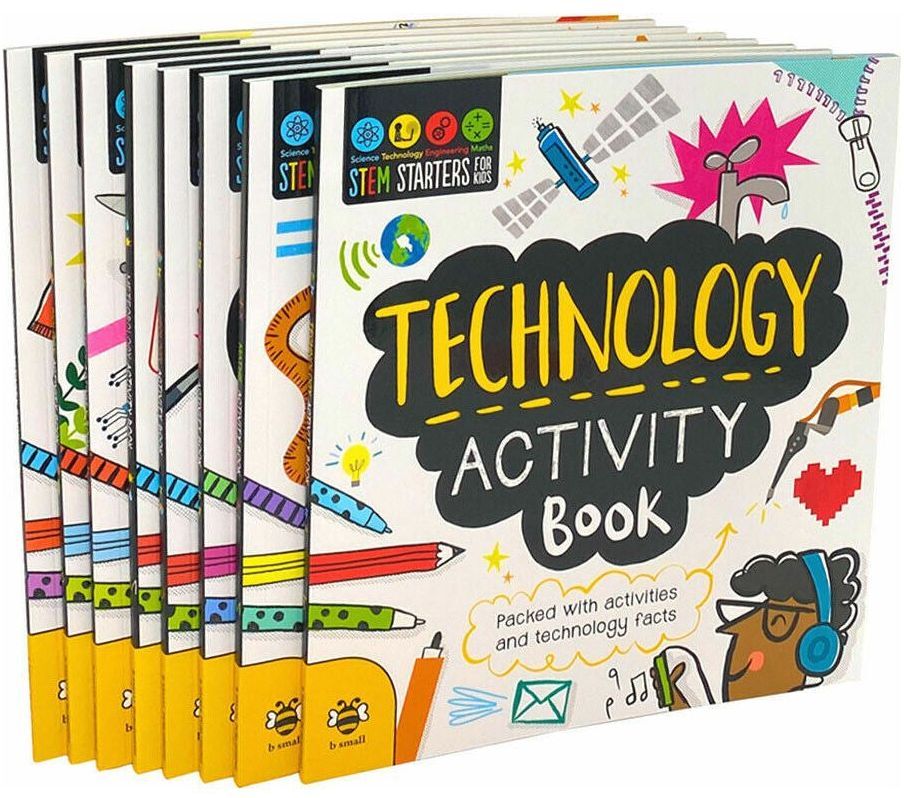
B Small Publishing STEM Educational Activity 8 Books Collection Set STEM Starters for Kids Science, Biology, Maths, Engineering, Meteorology for Early LearnersInspire curiosity and a love of learning with the STEM Educational Activity 8 Books Set, specially designed to introduce children to key STEM subjects through fun, hands-on activities. This engaging STEM Starters for Kids collection covers essential topics such as Maths, Engineering, Meteorology, and core scientific concepts, helping young learners build problem-solving skills, logical thinking, and creativity. Each book features age-appropriate explanations, interactive exercises, and simple activities that make complex ideas easy to understand. Ideal for home learning, classrooms, homeschooling, and after-school enrichment, this 8-book set supports early educational development while keeping children motivated and confident in STEM subjects. Why Parents & Educators Love This Set: 8 educational STEM activity books in one collection Introduces Maths, Engineering, Meteorology & Science Encourages critical thinking and problem-solving Hands-on activities that make learning fun Suitable for ages 5–10 Perfect for home, school, or gift giving A strong foundation for future learning, the STEM Educational Activity 8 Books Set helps children explore how the world works while developing essential academic and life skills. Science Activity Book In this particular title, little scientists will love the mix of non-fiction and activities in this educational book full of BIG ideas.Fun games and puzzles teach boys and girls about smells and taste buds, the power of magnetism, how sound travels and the different types of energy that fuel our lives and our world. Biology Activity Book Fun games and puzzles teach boys and girls about biology, plants, biomes, ecology, nature, digestion and the human body. Robotics Activity Book Fun games and puzzles teach boys and girls about robotics, automation, programming and engineering. Start a lifelong passion for STEM subjects. Meteorology Fun games and puzzles teach boys and girls about climates, the power of storms, how rain happens and the different ways of measuring the weather. Geology Fun games and puzzles teach boys and girls about rocks and fossils, the power of volcanoes, how earthquakes happen and the origin of the oil that fuels our lives and our world. Engineering Activity Book Fun games and puzzles teach boys and girls about structures that use science and technology to improve our lives. Engineering is what brings machines to life. Technology Activity Book Fun games and puzzles teach boys and girls about digital developments like mobile phones and the internet to more old-fashioned inventions like zips and door hinges. Maths Activity Book Fun games and puzzles teach boys and girls how to solve problems using addition, subtraction, multiplication and division.Maths is a huge part of science, technology and engineering.12,99 £*Shipping: 2,99 £Secure redirect to the provider
-
What is the relationship between bacteria and antibiotics in biology?
Bacteria and antibiotics have a complex relationship in biology. Antibiotics are drugs that are used to kill or inhibit the growth of bacteria, and they have been a crucial tool in treating bacterial infections. However, overuse and misuse of antibiotics have led to the development of antibiotic-resistant bacteria, which poses a significant threat to public health. This has led to a constant arms race between the development of new antibiotics and the evolution of antibiotic-resistant bacteria. Understanding this relationship is crucial for developing effective strategies to combat antibiotic resistance and to ensure the continued effectiveness of antibiotics in treating bacterial infections. **
-
Why are bacteria particularly suitable as research subjects in genetics?
Bacteria are particularly suitable as research subjects in genetics because they have a simple and well-understood genetic makeup, making it easier to study and manipulate their genes. They have a rapid reproduction rate, allowing for quick generation of large populations for genetic studies. Bacteria also have plasmids, which are small, circular DNA molecules that can be easily manipulated and transferred between different bacterial strains, making them valuable tools for genetic research. Additionally, bacteria are relatively easy and inexpensive to culture in the laboratory, making them accessible for a wide range of genetic studies. **
-
Who invented bacteria?
The discovery of bacteria is attributed to Dutch scientist Antonie van Leeuwenhoek. He is considered the "Father of Microbiology" and is credited with being the first person to observe and document bacteria using a microscope in the 17th century. **
-
Are bacteria protists?
No, bacteria are not protists. Bacteria are single-celled microorganisms that lack a nucleus and other membrane-bound organelles, and they belong to the domain Bacteria. On the other hand, protists are a diverse group of eukaryotic microorganisms that can be single-celled or multicellular, and they belong to the domain Eukarya. Therefore, bacteria and protists are two distinct groups of microorganisms with different characteristics and evolutionary histories. **
* All prices are inclusive of VAT and, if applicable, plus shipping costs. The offer information is based on the details provided by the respective shop and is updated through automated processes. Real-time updates do not occur, so deviations can occur in individual cases. ** Note: Parts of this content were created by AI.